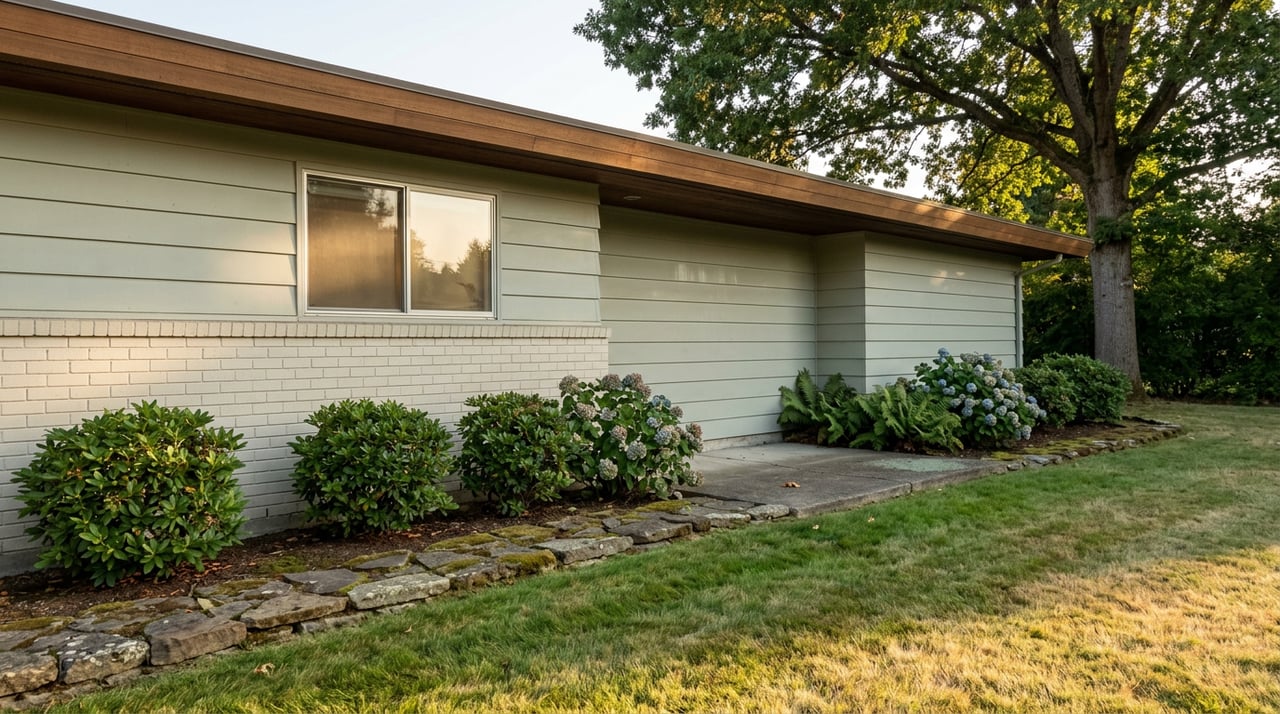
Picture a seller in Cedar Hills pulling out a folder of paperwork for a mid-century ranch that's been in the family for decades. Somewhere in there is a receipt from a company that came out years ago and "took care of" the old oil tank in the backyard. The seller assumes that folder means the tank question is closed. It isn't. When the buyer's inspector asks for the actual DEQ certification, the folder turns out to hold a pump-out receipt and nothing else. This is not a rare mix-up. It's the single most common surprise in these older westside neighborhoods, and it slows down closings that everyone assumed were routine.
That gap between what people assume Oregon law requires and what it actually requires is the thing worth understanding if you own or are about to buy one of Beaverton's mid-century homes. The word "decommissioned" gets used loosely in conversations, in listing notes, and in old paperwork. Oregon law uses it much more narrowly, and the distance between the loose version and the legal version is exactly where closings stall.
What Oregon Law Actually Requires, and What It Doesn't
Oregon Revised Statute 466.878 sets a low bar. When a heating oil tank is no longer in use, has been replaced, or the property is being sold, the owner is required to pump out the remaining oil and be able to show documentation that it's been emptied. That's it. Full decommissioning, meaning the tank is cleaned, then either removed or filled with an inert material like sand or slurry, and the whole project is certified by a licensed provider and registered with the state, is voluntary once the tank is empty.
So a homeowner can be completely compliant with state law and still have an unremoved, unsampled steel tank sitting in the yard. The separate disclosure law, ORS 105.464, only requires sellers to disclose tanks they actually know about. If nobody in the chain of ownership ever mentioned it, and there's no vent pipe visible from the street, a seller can honestly check "no" on a disclosure form and still be sitting on one.
Buyers and lenders, understandably, want more than the legal minimum. Most will insist on a locate and a soil test before they'll close, even on a tank with old paperwork attached. That's not a formality. It's the buyer closing a gap the state left open.
Why This Lands Differently in Cedar Hills, West Slope, and Cedar Mill
Beaverton's oldest neighborhoods are exactly where this shows up. Cedar Hills is known for classic mid-century homes built primarily in the 1950s and 1960s, many with mature landscaping and original systems that predate current energy codes. West Slope and Cedar Mill carry a similar mix of established mid-century homes from the same building era. Diesel heating oil stored in an underground tank was the standard way to heat homes in subdivisions like Aloha and Beaverton before natural gas service reached the area, and across the wider Portland region, most homes built before 1970 had one of these tanks installed at some point.
None of that is a reason to avoid these neighborhoods. It's a reason to plan differently. Cedar Hills homes are also moving fast right now, often going pending in under two weeks, which means a seller who hasn't already located and tested a tank is unlikely to discover a problem before an offer is already on the table. The tank question stops being something you handle on your own schedule and becomes something a buyer's inspector finds during the inspection contingency, at which point you're negotiating price or timeline under pressure instead of planning ahead of a listing.
The 90-Day Problem Nobody Budgets For
Here's the part that catches even prepared sellers off guard. Oregon DEQ treats a soil sample as valid for no more than 90 days. After that window, the agency will not accept the data to certify a decommissioning or cleanup, and a new sample has to be collected.
Most of the time that's a non-issue. But escrow timelines slip. Financing contingencies, repair negotiations, or a slow appraisal can easily push a 30-day close into something longer. If the buyer's soil sample was taken early in the process and the closing date drifts past the 90-day mark, the test that everyone thought settled the question no longer counts, and someone has to pay to redo it, often at the worst possible moment in the transaction.
There's a second version of this same trap for tanks that were decommissioned years ago. Soil standards have tightened since the state's Heating Oil Tank Program launched in 2000, and a decommissioning completed before roughly 2009 frequently doesn't hold up against a current retest. The paperwork looks fine. The old certification is real. It just doesn't reflect what today's testing standards would find.
| What sellers often assume | What's actually true |
|---|---|
| "I have a decommissioning certificate, so I'm covered." | A pump-out receipt and a full DEQ-certified decommissioning are different documents. Only the second one satisfies most buyers and lenders. |
| "My disclosure form says no known tank, so I'm not liable." | Disclosure only covers what you know. Liability for a leak transfers to the current owner regardless of when it happened. |
| "The tank was decommissioned years ago, so it's done." | If that work predates roughly 2009, a modern soil retest can still find levels that require a second decommission. |
| "We'll deal with it if the buyer asks." | Escrow delays can push a valid soil sample past DEQ's 90-day window, forcing a redo mid-transaction. |
What This Costs, in Real Numbers
For a standard buried tank with no contamination, removal typically runs $1,500 to $4,000, with basement access jobs closer to $2,500 to $5,000 because of the extra work involved in reaching the tank. A locate service to confirm a tank exists usually costs $100 to $200, and a soil sample to check for leaks runs another $200 to $300. If sampling turns up contamination, remediation costs climb fast, and in the Willamette Valley's clay-heavy soils and shallow winter water table, that work can add $5,000 to $35,000 or more depending on how far the contamination has spread.
As of February 2026, Redfin put Beaverton's citywide median sale price at $595,000, with a rolling 12-month RMLS median for the Beaverton/Aloha submarket closer to $512,500 as of January 2026. A $3,000 decommission is a rounding error against those numbers. A remediation bill toward the higher end of that $5,000 to $35,000 range, discovered mid-inspection, is not.
A Short Checklist Before You List
- Look for the tell-tale signs yourself first: a small fill pipe near the foundation and a vent pipe running two to eight feet up an exterior wall are the two most reliable clues a buried tank exists.
- If your home was built before the mid-1960s and you don't know its heating history, budget time and money for a locate before you list, not after an offer comes in.
- Pull whatever records you can find through Oregon DEQ's Your DEQ Online public portal, which tracks registered decommissioning and cleanup sites statewide, though its records only go back to 2000.
- If your paperwork shows a decommissioning completed before 2009, plan for the possibility that a buyer's lender will want a fresh soil sample regardless of the old certificate.
- If you're already under contract, watch your closing date against the 90-day clock on any soil sample taken early in the transaction.
A Short FAQ
Does every mid-century home in Beaverton have an oil tank? No, but the housing stock in Cedar Hills, West Slope, Cedar Mill, and similar neighborhoods was largely built during the years when oil heat was common in areas without natural gas service, so the odds are higher than in newer subdivisions.
If I genuinely don't know about a tank, am I protected? Oregon's disclosure law only requires you to report tanks you actually know about. It does not remove your responsibility for cleanup if one is found later, even if the leak happened before you owned the home.
Can I decommission the tank myself to save money? Oregon law allows it, but you can't act as a general contractor and hire subcontractors to do parts of the work. If you're not doing every step yourself, the job needs a licensed Heating Oil Tank service provider, and most buyers and lenders will want to see that provider's certification either way.
If you're weighing a listing in Cedar Hills, West Slope, or anywhere else in Beaverton's older housing stock and want a straight answer about what a tank question might mean for your timeline and your budget, Shey Gladstone can walk through it with you before it becomes a surprise in escrow. Let's Connect.