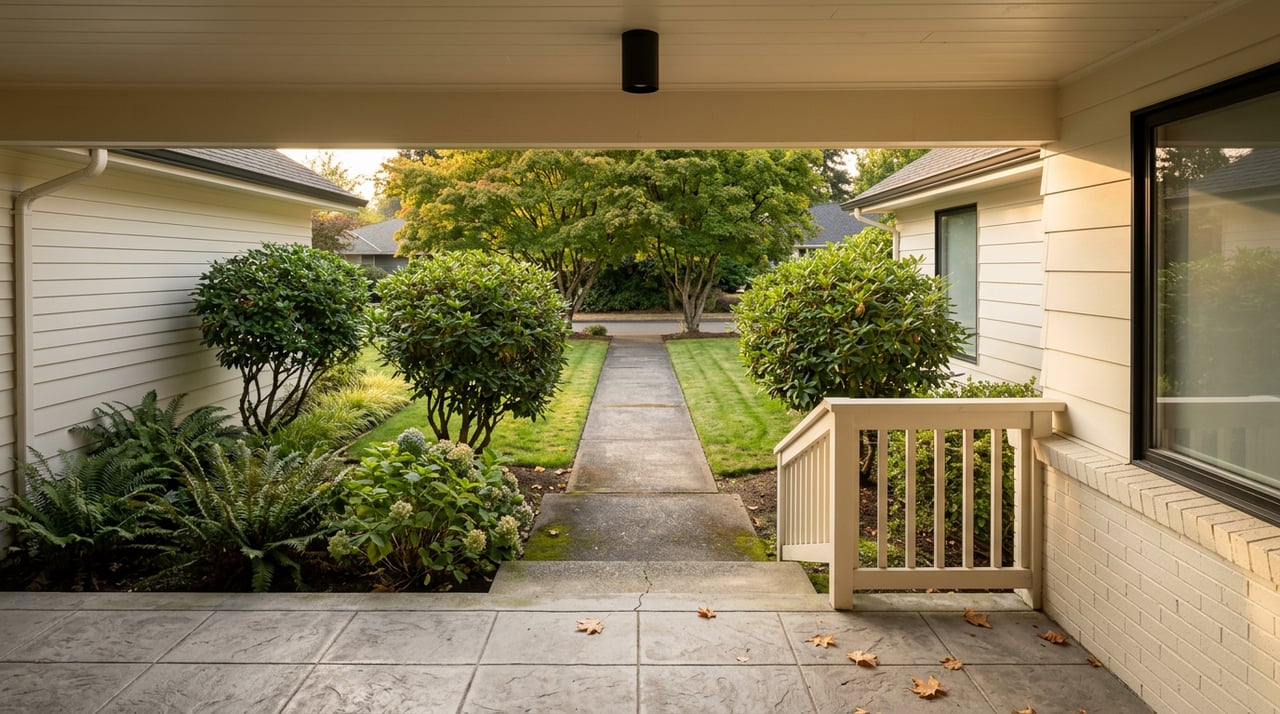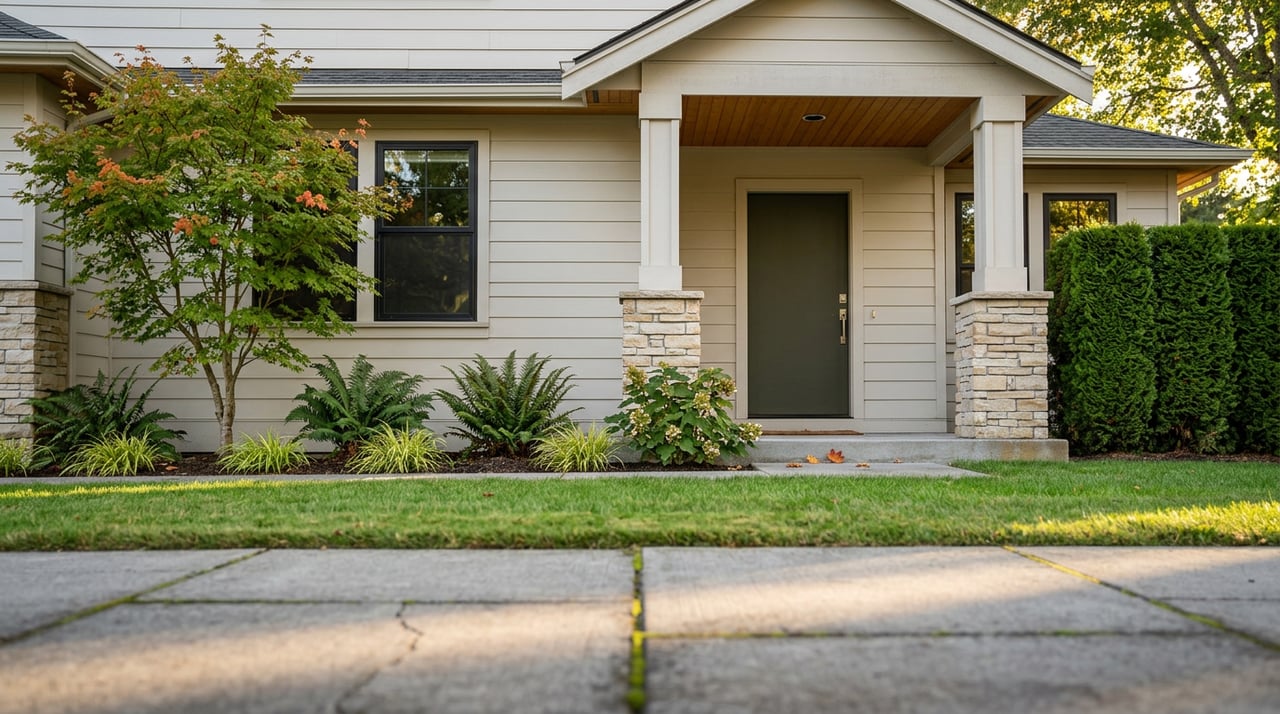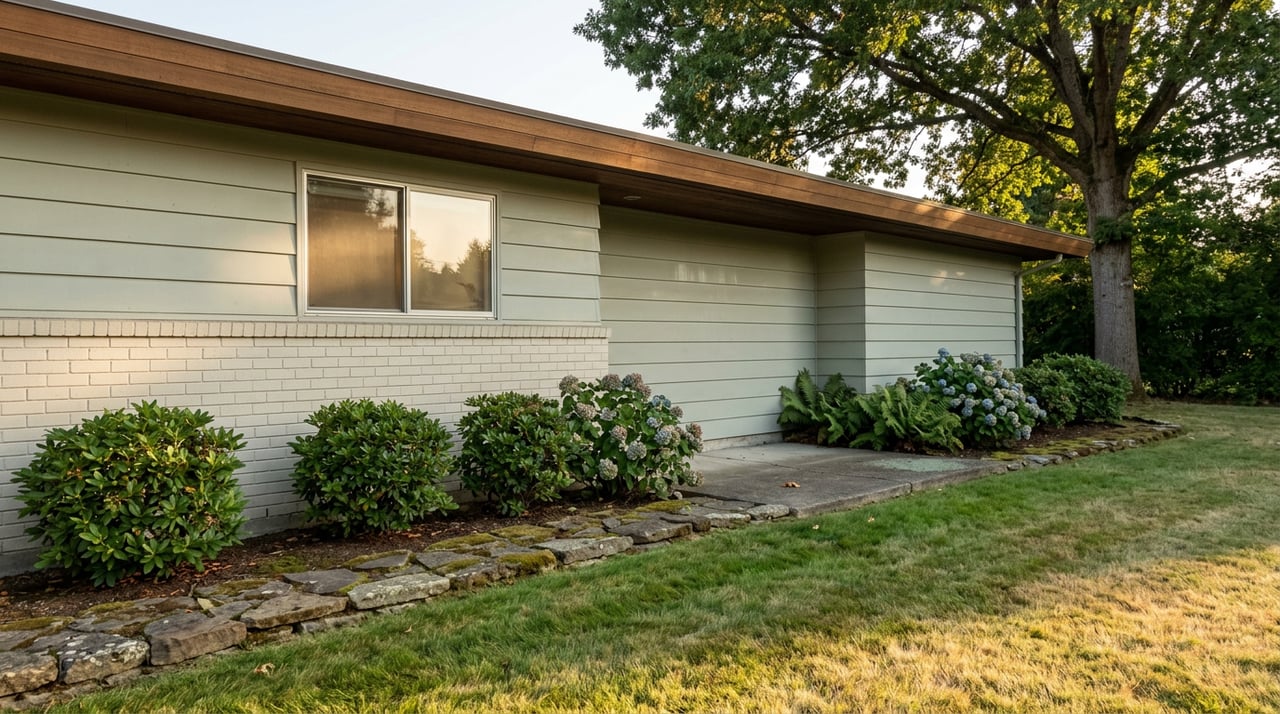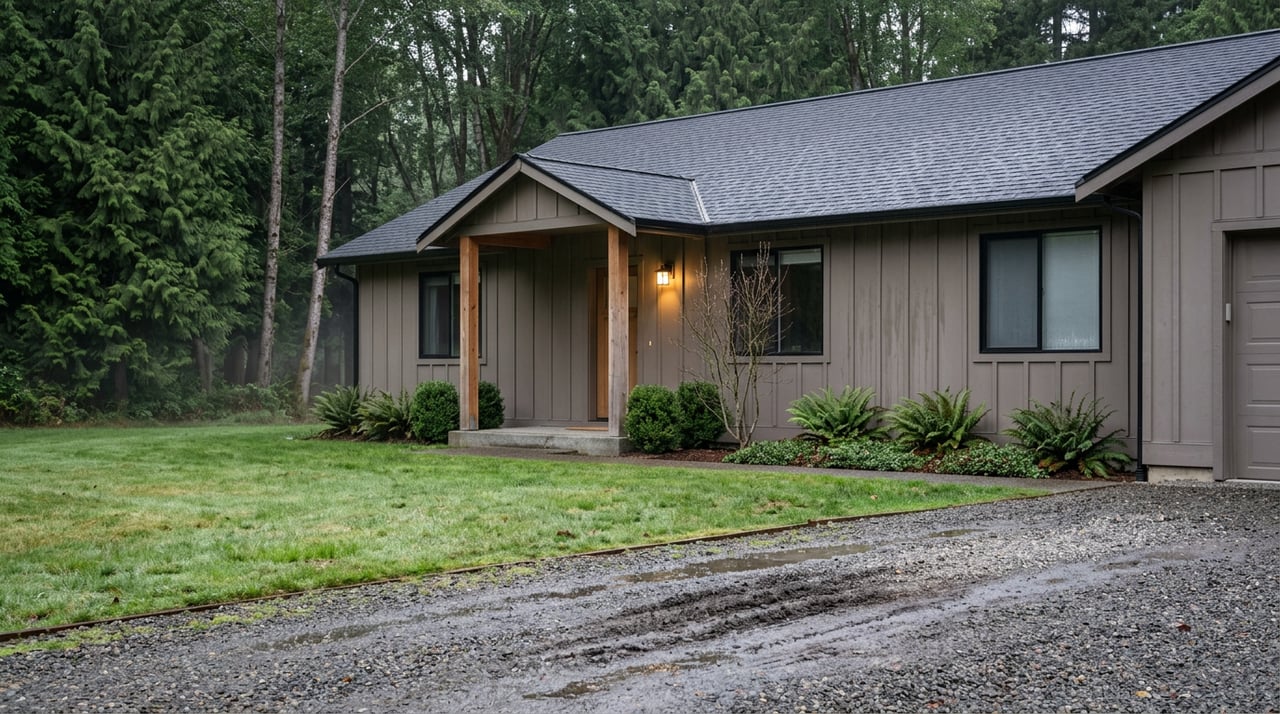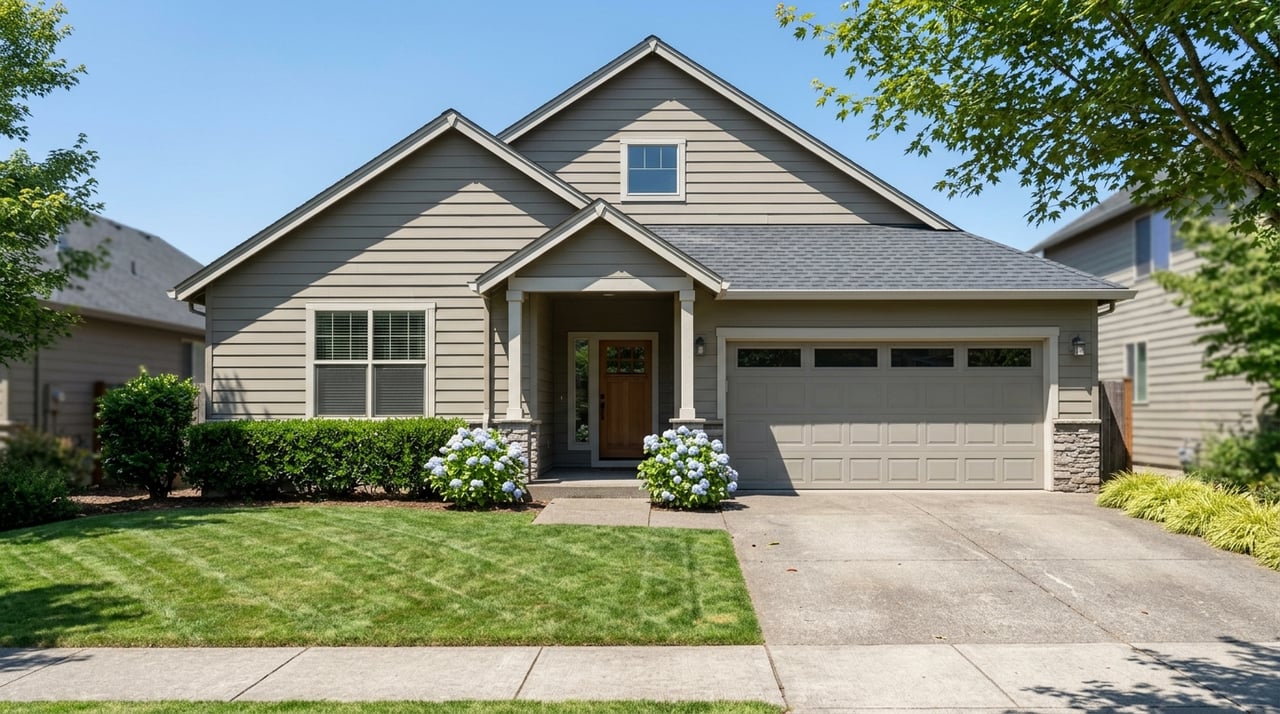
Two homes go up for sale on the same week in Hillsboro. One sits in Orenco Station, a walkable, MAX-adjacent neighborhood built around a commute to Intel's campuses. The other sits in Reed's Crossing, a newer master-planned community a few miles south. Pull the neighborhood-level data on either one and you'll see prices that look like they belong to two different cities, not two corners of the same one.
That split is not a coincidence of timing. It is the direct, traceable result of what happened to Intel's Oregon workforce between late 2024 and the end of 2025, and it matters more than any countywide median if you are actually comparing neighborhoods in Washington County right now.
The Number That Doesn't Match The Address
Here is the part that trips people up first. Pull up Orenco Station's sale data for the twelve months ending in March 2026 and the median sale price across all property types sits at $357,500, down over 20% year over year. That number alone reads like a neighborhood in free fall. But look at single-family homes specifically in the same neighborhood, and they were still closing in the $500,000 to $525,000 range from late 2025 through mid-2026.
Both numbers are accurate. They are just measuring different things. Orenco Station's housing stock is an unusual mix for Hillsboro: postindustrial condo and apartment buildings sitting alongside traditional Craftsman-style single-family homes, a legacy of its 1990s redevelopment around the MAX Blue Line. When condo and attached-home sales make up a larger share of a given month's closings, the blended median drops hard, even if not a single detached house actually lost that much value. A neighborhood-level median in a mixed-stock area can swing 20% in a year based on what type of home happened to sell, not what any individual home is worth.
If you are comparing two Washington County neighborhoods and one of them has a lot of condos or townhomes in the mix, ask what's actually selling before you trust the headline number.
What Actually Broke
The reason Orenco Station's resale market softened at all traces back to a single employer. Intel eliminated more than 4,400 Oregon positions between late 2024 and the end of 2025, a roughly 20% contraction from its peak local headcount, concentrated almost entirely at its Hillsboro facilities. The cuts came in three distinct waves:
- October 2024: about 1,300 positions eliminated, with separations beginning that November
- July 2025: roughly 2,400 additional positions cut across Ronler Acres, Jones Farm, Hawthorn Farm, and Aloha
- November 2025: a further 669 roles removed, pushing the 2025 total above 3,100
Realtors in the county felt it in real time. One told KOIN 6 News that buyer traffic in Intel-dependent areas dried up almost immediately, with more sellers than buyers showing up in a market that had been fiercely competitive for years. That is exactly the pattern Orenco Station and AmberGlen show in the data: homes near the Intel commute shed took longer to sell and closed for less, particularly once you strip out new construction and look at resale-only listings.
Why Reed's Crossing Isn't Playing by Intel's Rules
South Hillsboro tells a different story, and the difference is structural, not just geographic. Reed's Crossing is a 463-acre master-planned community built for a mixed buyer base rather than a single employer's payroll. It's approved for roughly 2,800 single-family homes and over 1,000 multifamily units, anchored by a 36.6-acre town center, a 23-acre greenway, and easy access to Costco, Fred Meyer, and New Seasons Market. It sits close enough to the Blue Line MAX for a Portland commute but doesn't depend on any one campus to fill its homes.
That diversification shows up in how the neighborhood has weathered the same cooling period. Even with its own price correction of around 11% from recent highs, South Hillsboro has remained one of the faster-moving submarkets in the city, because its buyers aren't drawing paychecks from a single vulnerable source. Families relocating from Portland, healthcare and Kaiser-adjacent employees, and buyers simply prioritizing trail access and a walkable town center over raw square footage have kept demand steady even as Intel-adjacent neighborhoods absorbed the shock. The City of Hillsboro's South Hillsboro page outlines the scale of the planned build-out if you want to see how much of this growth is still in the pipeline.
| Orenco Station | Reed's Crossing / South Hillsboro | |
|---|---|---|
| Built around | Intel commute, MAX transit | Mixed employer base, town center lifestyle |
| Housing mix | Condos, attached townhomes, Craftsman singles | Predominantly new-construction single-family and townhomes |
| Recent price direction | Down sharply in blended median, more moderate for single-family only | Down roughly 11% from peak, still moving quickly |
| What's driving it | Single-employer layoffs concentrated nearby | Diversified demand, ongoing new-construction pipeline |
The Rent Data Confirms It's Not Countywide
If you want proof this is a localized shock and not a Washington County-wide correction, the rental numbers make the case cleanly. Hillsboro's average rent fell to $2,149 as of early 2026, down $146 year over year, a 6.8% drop that accelerated sharply after the layoff announcements, with month-over-month declines of $246 in the worst stretch. Beaverton, a few miles east and considerably less dependent on a single employer, saw average rent slip to $2,045, a much more modest 2.6% decline. Portland metro rents overall actually rose 2.5% to $1,795 over the same period, according to Christensen Group's rental market analysis.
That gradient, sharp decline in Hillsboro, mild softening in Beaverton, growth across the broader metro, only makes sense if the shock is tied to a specific employer and specific geography rather than a general Washington County slowdown. If the whole county were cooling, Beaverton and metro-wide rents would be falling too.
What This Means If You're Comparing Washington County Neighborhoods
Before you compare a median price in one Washington County city to another, a few questions will tell you more than the sticker number:
- Who's actually buying here, and do they share an employer? A neighborhood built around one company's campus carries risk that a mixed-employment neighborhood doesn't, even if both show similar prices today.
- What's the property type mix behind that median? A blended median in a condo-heavy area can move dramatically without reflecting what a comparable single-family home is actually worth.
- Is new construction propping up the averages? New-construction sales made up 27.8% of all Hillsboro closed sales from 2023 through 2025, largely from projects planned and entitled before the layoffs began. That steady pipeline has kept overall city averages looking calmer than the resale-only market underneath them, a pattern documented in Portland Appraisal Blog's original RMLS analysis. As that pre-layoff pipeline clears in the coming years, the broader averages may start looking more like the resale numbers already do.
- How long has inventory been sitting? Days on market tells you more about real buyer demand than a single closed sale does, especially in a neighborhood absorbing an employment shock.
A Short FAQ
Does this mean Hillsboro is a risky place to buy right now? It depends entirely on which part of Hillsboro. Intel-adjacent neighborhoods carry more employment-concentration risk than they did two years ago. Newer, diversified communities like South Hillsboro have shown more resilience through the same period. Treating "Hillsboro" as one market misses the point.
Could this same split show up in other Washington County cities? Any city with a heavy concentration of one employer near its housing stock is worth the same scrutiny, whether that's a tech campus, a hospital system, or a major manufacturer. Beaverton's more diversified employment base is a big part of why its rental market softened far less than Hillsboro's over the same window.
Is now a good time to buy in an Intel-adjacent neighborhood? Softer prices and longer market times can create real opportunity for buyers with a longer time horizon, but it's worth going in with clear eyes about how tied the neighborhood's demand is to a single employer's future hiring decisions.
If you're weighing a purchase in Hillsboro, Beaverton, or anywhere else in Washington County and want a read on how a specific neighborhood's buyer base actually breaks down, that's exactly the kind of groundwork Shey Gladstone walks clients through before they write an offer. Let's Connect and figure out which side of the split you're standing on.