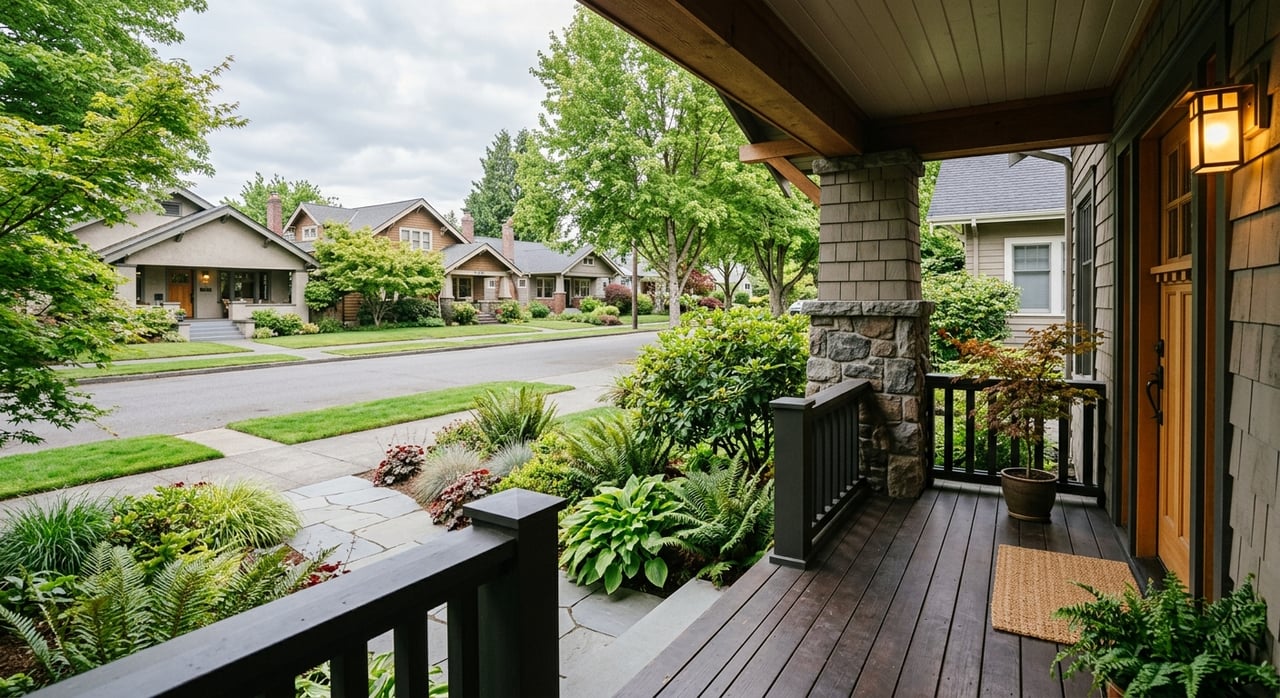
Looking for the right Portland neighborhood can feel overwhelming fast. One area may make daily errands easy without a car, while another may give you more space, better park access, or a commute pattern that fits your routine. If you want a simpler way to sort your options, this guide will help you match Portland-area neighborhoods to the lifestyle you actually want to live. Let’s dive in.
Start With Your Daily Routine
One of the best ways to narrow down Portland neighborhoods is to think about how you want everyday life to work. In Portland, the biggest lifestyle divide is often between central, transit-friendly neighborhoods and areas that trade some walkability for space, parks, or a more driving-oriented routine.
According to TriMet’s transit system overview, MAX connects Portland’s central city with Beaverton, Clackamas, Gresham, Hillsboro, Milwaukie, North and Northeast Portland, and Portland International Airport. Portland Streetcar serves the central city, and WES commuter rail adds weekday rush-hour service between Beaverton, Tigard, Tualatin, and Wilsonville.
That means your best-fit neighborhood often comes down to a few practical questions:
- Do you want to walk to restaurants, services, and daily errands?
- Would you rather have a neighborhood feel than a downtown feel?
- Is park access and more space more important than walkability?
- Do you need your location to line up with a specific commute route?
Central City for Walkability
If you want the most walkable, transit-friendly lifestyle in Portland, the central city is the clearest place to start. This is where you will find some of the city’s highest Walk Scores, along with strong MAX and streetcar access.
For buyers who want a car-light routine, these neighborhoods stand out:
- Pearl District: Walk Score 98, Transit Score 88
- Old Town Chinatown: Walk Score 97, Transit Score 91
- Goose Hollow: Walk Score 94, Transit Score 81
- Northwest District: among Portland’s top-ranked walkable neighborhoods
- Lloyd District: Walk Score 91, Transit Score 80
These central neighborhoods work well if you want to be close to restaurants, services, and rail connections. They can also be a strong match if you are considering condo-style living and want easy access to the core of the city.
Pearl District
The Pearl District is one of the strongest examples of a car-light Portland lifestyle. With a Walk Score of 98 and Transit Score of 88, it offers easy access to both Portland Streetcar and MAX service.
If your ideal day includes walking to coffee, dinner, errands, or meetings, this area is worth a close look. It tends to appeal to buyers who want convenience, density, and central-city energy.
Old Town Chinatown and Goose Hollow
Old Town Chinatown offers a Walk Score of 97 and Transit Score of 91, with access to multiple MAX lines and streetcar service. That level of transit access can make it easier to get around without relying heavily on a car.
Goose Hollow combines strong walkability with quick access to MAX Blue and Red lines and the streetcar. It also provides convenient access toward Washington Park, which can be a plus if you want a central location with an easier connection to major green space.
Lloyd District and South Portland Edge
The Lloyd District remains a strong central option, with a Walk Score of 91 and Transit Score of 80. Multiple MAX lines and streetcar service support a transit-first routine.
South Portland is more mixed overall, with a neighborhood Walk Score of 72, but locations near Moody offer excellent transit access and direct connections to the Streetcar and MAX Orange Line. If you want a central location but are open to slightly different tradeoffs, this area may be worth exploring.
Eastside for Balance
If you like the idea of walkability and city access but want a more neighborhood-scaled feel, close-in Eastside neighborhoods often strike that balance well. These areas tend to offer strong bike and walk access without feeling as intense as the downtown core.
Several Eastside neighborhoods score very well for walkability, including:
- Sunnyside: Walk Score 93
- Buckman: Walk Score 92
- Hosford-Abernethy: Walk Score 92
- Richmond: Walk Score 91
- Eliot: Walk Score 89
- Irvington: Walk Score 84
This category is often a good fit if you want neighborhood streets, local retail access, and easier central-city access while keeping a more residential feel.
Buckman and Sunnyside
Buckman has a Walk Score of 92 and is near the B Loop streetcar, MAX Blue, Red, and Green lines, plus several bus routes. That gives you flexibility if your routine mixes driving, biking, transit, and walking.
Sunnyside scores even slightly higher at 93 and has nearby MAX access along with a strong bike and walk profile. If you want a close-in location with solid connectivity and a neighborhood-centered feel, Sunnyside is a strong contender.
Hosford-Abernethy and Richmond
Hosford-Abernethy offers a Walk Score of 92, nearby bus lines, and Orange Line access in the sampled area. It can work well if you want close-in convenience without being in the middle of the highest-density parts of the city.
Richmond has a Walk Score of 91 and access to bus lines including 75, FX2, and 9, with Orange Line access nearby. For many buyers, that mix supports a practical daily routine while keeping a neighborhood feel.
Irvington and Eliot
Irvington comes in at a Walk Score of 84, with good transit and strong bike access. It is a little less rail-dense than some of the highest-scoring inner neighborhoods, but it still offers strong overall connectivity.
Eliot has a Walk Score of 89 and sampled locations with excellent access to streetcar service and several MAX lines. If you want Eastside access with very strong transit support, Eliot deserves attention.
Hills for Parks and Space
Some buyers are happy to give up walkability in exchange for more space, a quieter setting, or easier access to major parks. In Portland, the West Hills and nearby southwest hill areas often fit that lifestyle.
These neighborhoods tend to be more car-oriented, but they offer tradeoffs that many buyers value. In short, if your ideal routine involves driving more and spending more time outdoors, this category may be a better fit than the central city.
Hillsdale
Hillsdale has a Walk Score of 57, which makes it more walkable than many hill neighborhoods, but still far less walkable than inner Eastside or central-city options. It also has several nearby bus connections.
For buyers who want a middle ground, Hillsdale can make sense. You get some neighborhood convenience while still leaning more toward a space-and-parks lifestyle.
Sylvan-Highlands and Park Access
Sylvan-Highlands is much more car-dependent, with a Walk Score of 19. Even so, it sits near Washington Park MAX station and several bus lines, which can help if transit access still matters for part of your routine.
The outdoor access here is a big part of the appeal. Forest Park offers 5,200 acres and more than 80 miles of trails, and Washington Park spans 410 acres with the Zoo, Japanese Garden, Rose Test Garden, and Red and Blue MAX service every 15 minutes.
Suburbs for Commute Patterns
If you want more space or a more suburban setting, nearby westside suburbs can still be a practical fit, especially if you choose areas with stronger transit connections. The key is understanding that walkability varies a lot by location.
For many buyers, these suburbs make sense when the goal is to balance home size, commute needs, and day-to-day convenience. The tradeoff is usually a more driving-oriented routine than you would have in Portland’s central neighborhoods.
Beaverton Central
Beaverton Central is one of the stronger westside suburban options for transit-oriented buyers. It has a Walk Score of 73 and access to MAX Blue, MAX Red, and WES.
If your work or lifestyle depends on westside commuting, this can be one of the best suburban areas to consider. It offers a more suburban setting while still supporting a rail-based routine better than many nearby alternatives.
Tigard and Lake Oswego
Tigard’s Transit Center area has a sample Walk Score of 48, with WES and bus connections at the transit center. That makes it more commute-specific than broadly walkable, but it can still work well depending on your route.
Lake Oswego is more car-oriented overall, with a citywide average Walk Score of 37 and minimal transit. Some pockets are more walkable, but the overall pattern is still more driving-focused.
Quick Neighborhood Match Guide
If you want a simple way to narrow your search, here is a practical framework:
- Choose Pearl, Old Town Chinatown, Goose Hollow, Northwest District, or Lloyd District if you want top-tier walkability and frequent transit.
- Choose Buckman, Sunnyside, Hosford-Abernethy, Richmond, Eliot, or Irvington if you want a balanced Eastside lifestyle with a more neighborhood feel.
- Choose Hillsdale or Sylvan-Highlands if you care more about park access, space, and a hillside setting than daily walkability.
- Choose Beaverton Central or Tigard near the transit center if you want suburban living with stronger rail-based commute options.
- Choose broader Lake Oswego if you are comfortable with a more car-oriented suburban routine.
How to Choose With Confidence
The best Portland neighborhood is not the one with the highest score on paper. It is the one that fits your real life, your commute, your budget, and the way you want your week to feel.
That is where a clear decision framework helps. Instead of trying to tour everything, you can narrow your search by focusing on your top priorities first: walkability, transit, neighborhood feel, park access, or space.
If you want help sorting through Portland neighborhoods in a practical, honest way, Shey Gladstone offers steady guidance built around your goals, not pressure. Whether you are buying your first home, planning a move, or looking for the right fit in the Portland metro, he can help you compare tradeoffs and move forward with confidence.
FAQs
Which Portland neighborhoods are best for walkability and transit?
- Central-city neighborhoods like Pearl District, Old Town Chinatown, Goose Hollow, Northwest District, and Lloyd District offer some of Portland’s strongest walkability and transit access.
Which Portland neighborhoods have a neighborhood feel but still offer good access?
- Close-in Eastside neighborhoods like Buckman, Sunnyside, Hosford-Abernethy, Richmond, Eliot, and Irvington often offer a more residential feel with strong walking, biking, and transit connections.
Which Portland areas are better for park access and more space?
- Hillsdale and Sylvan-Highlands are better fits if you want a more space-oriented lifestyle with easier access to major park areas like Forest Park and Washington Park.
Which Portland suburbs work best for rail commuting?
- Beaverton Central and the Tigard Transit Center area are two of the stronger westside suburban options if rail commuting is important to your daily routine.
How should you choose the right Portland neighborhood for your lifestyle?
- Start by ranking your priorities, such as walkability, commute, space, transit, and neighborhood feel, then compare areas based on how well they support your everyday routine.